
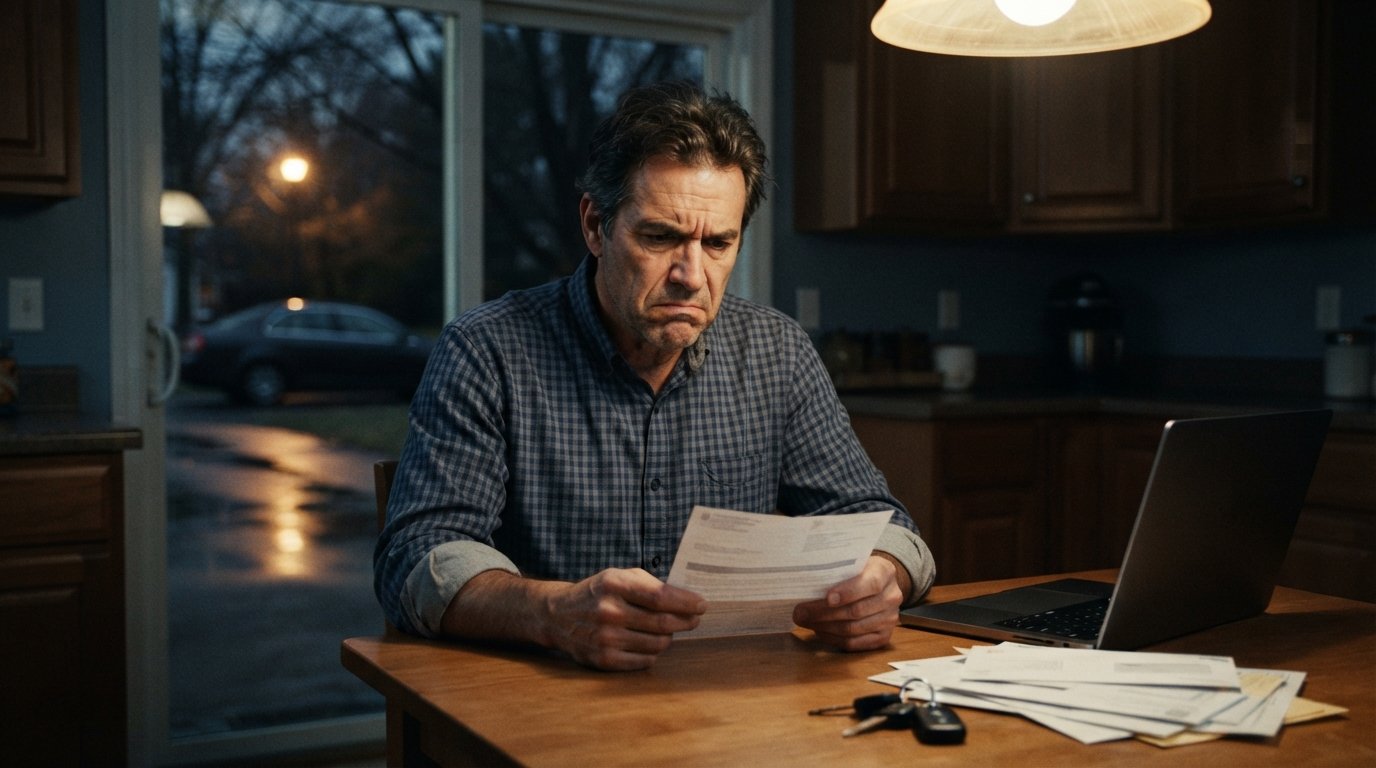
Missed Traffic Court Date: What Happens Next
A missed traffic court date can trigger a bench warrant or license suspension. Call (833)-248-4565 to connect with local attorneys who can help you act fast.

By Patrick Lang
Missing a court date for a traffic ticket can turn a minor citation into a serious legal problem faster than most drivers expect. A single overlooked notice can lead to a bench warrant, a suspended license, or additional fines, and the consequences vary widely depending on the type of violation and the state where it occurred. If you have already missed a court date for a traffic ticket, the most important thing to understand is that the situation is fixable, but the clock is running. The steps you take in the next few days will largely determine whether this stays a manageable administrative issue or escalates into a criminal matter requiring legal representation. This guide explains what happens after a missed court date, how to respond, and when to bring in a traffic or criminal defense attorney to protect your record and your driving privileges.
How a Missed Court Date Turns a Ticket Into a Warrant or Suspension
When a traffic citation is issued, the court schedules an appearance date and expects either your presence or a response, such as paying the fine or pleading not guilty by mail. If neither happens, the judge may issue a failure to appear (FTA). An FTA is not a separate criminal charge in every state, but it is a formal mark on your record that triggers immediate consequences. The most common outcomes are a bench warrant for your arrest, a suspension of your driver's license, or both. A bench warrant means a judge has authorized law enforcement to take you into custody, which can happen during a routine traffic stop, at a border crossing, or even when you appear at the courthouse for an unrelated matter.
License suspension is often automatic and may occur before you receive any written notice. Many state DMVs receive electronic FTA reports from courts and suspend driving privileges within days. Driving on a suspended license is itself a separate offense, sometimes a misdemeanor, which adds another layer of penalties. Fines also increase: courts frequently add failure-to-appear fees, late penalties, and administrative surcharges on top of the original ticket amount. In some jurisdictions, the court can convert the original infraction into a more serious charge if the missed appearance is treated as contempt. The exact rules depend on whether the citation was an infraction, a misdemeanor, or a felony traffic offense.
It helps to understand that courts do not track you down personally before issuing a warrant. Notices are sent to the address on your citation or your vehicle registration, and if that address is outdated, you may never see the warning. This is why drivers are often surprised to learn a warrant exists. The good news is that a bench warrant for a traffic matter is usually recalled once you appear or resolve the underlying case, but only if you take action. Ignoring it allows the consequences to compound, including possible arrest, higher insurance rates, and difficulty renewing a license or registration.
Infractions, Misdemeanors, and Failure-to-Appear Rules
Traffic violations fall into distinct legal categories, and the category determines what happens when you miss court. Most routine speeding tickets and equipment violations are infractions, which are civil matters punishable by fines but not jail time. For an infraction, a missed court date typically results in a civil assessment, an added fee, and possibly a license hold, but a bench warrant is less common unless the judge specifically ordered you to appear. Misdemeanor traffic offenses, such as reckless driving, driving without a valid license, or a second DUI, are criminal matters. Missing court on a misdemeanor can lead directly to a bench warrant and a new criminal charge for failure to appear. Felony traffic offenses, including hit-and-run with injury or felony DUI, carry the most severe consequences, and an FTA in those cases can result in a warrant and significant bail.
Failure-to-appear rules also vary by state and by court. Some states treat an FTA as an automatic license suspension regardless of the violation type, while others reserve suspension for moving violations or criminal charges. Some courts allow a grace period of a few days to a few weeks before issuing a warrant, and others issue warrants on the same day. In certain jurisdictions, you can avoid a warrant by paying the ticket online before the close of business on the appearance date, even if you miss the actual hearing. In others, payment alone does not clear the FTA, and you must appear in person or file a written request to reschedule.
Another important distinction is between a mandatory appearance and an optional one. A mandatory appearance is required for criminal traffic charges, for drivers under a certain age, or for violations that could lead to jail time. An optional appearance means you may pay the fine without going to court. Missing a mandatory appearance is far more serious than missing an optional one. If you are unsure which type applies to your ticket, the citation itself usually states whether an appearance is required. When in doubt, contact the court clerk before the deadline, because a single phone call can prevent a warrant from ever being issued.
Steps to Take Immediately After Missing a Court Date
Acting quickly is the single most effective way to limit the damage. The first step is to contact the court clerk in the jurisdiction where the ticket was issued. Ask for the case number, the current status of the case, and whether a warrant or license suspension has been issued. The clerk can explain your options, which may include paying the fine, requesting a new court date, or filing a motion to recall the warrant. Be honest about the missed date and ask what the court requires to move forward. In many cases, the clerk will schedule a new appearance and place the case back on the calendar, sometimes without requiring a formal hearing.
If a bench warrant has already been issued, you may need to appear before a judge to have it recalled. Some courts allow you to do this on a walk-in basis during specified hours, while others require a scheduled hearing. Bring identification and any documentation that explains the missed date, such as a medical note, a work obligation, or proof of a mailing address change that prevented you from receiving the notice. Judges have discretion to recall warrants, and showing that you are taking responsibility often helps. If your license has been suspended, ask the court for a clearance form or abstract that you can take to the DMV once the case is resolved.
Here is a practical sequence to follow if you have missed a court date for a traffic ticket:
- Contact the court clerk immediately to confirm the case status and any warrant or suspension.
- Ask what the court requires to reschedule or recall the warrant, and write down the instructions.
- Gather supporting documents, including the original citation, any notices you received, and proof of the reason you missed the date.
- Appear at the scheduled hearing or walk-in date, and request a recall of the warrant or a new court date.
- Once the case is resolved, obtain a clearance from the court and deliver it to the DMV to restore your license.
Do not wait for a letter from the court before acting. Courts are not required to send a second notice, and many do not. If you moved since the ticket was issued, update your address with the court and the DMV as soon as possible. A current address ensures you receive future notices and reduces the risk of another missed date. Keep copies of every document you send or receive, and note the name of each clerk or court employee you speak with, along with the date and time of the conversation.
When to Request a Quote From a Traffic or Criminal Attorney
Not every missed court date requires a lawyer, but some situations clearly benefit from professional help. If a bench warrant has been issued, if the original charge is a misdemeanor or felony, if your license has been suspended, or if you have missed more than one court date, speaking with an attorney is a smart move. An attorney can file motions to recall warrants, negotiate with the prosecutor, request a reduction of charges, and appear on your behalf in many jurisdictions. This can save you from taking time off work or traveling to a distant court, and it can prevent small mistakes that make the situation worse.
Attorneys also understand local court practices that are not obvious from the citation. Some judges routinely recall warrants when a defendant appears with counsel; others require a formal hearing. A lawyer can tell you which approach is likely to work in your specific courthouse. If the ticket could affect your commercial driver's license, your insurance rates, or your employment, the cost of legal help is often far less than the long-term financial impact of a conviction or suspension. When you are ready to explore options, you can request a quote through TheLawyerDirectory to connect with local attorneys who handle traffic and criminal defense matters. There is no obligation to hire, and participating attorneys may contact you to discuss your case.
It is also worth understanding what happens after you submit a legal quote request. In our guide on what happens after you submit a legal quote request, we explain how the process works and what to expect from participating attorneys. This can help you prepare questions and compare responses before deciding whether to hire counsel. Keep in mind that a directory is not a law firm and does not give legal advice; it is a tool for finding lawyers who may be able to help.
Preparing Documents and a Timeline Before Any Court Appearance
Preparation makes a measurable difference in how a judge views your case. Before any appearance, assemble a folder with the original citation, any court notices, proof of insurance, your driver's license, and a written timeline of what happened. The timeline should include the date you received the ticket, the date you first learned of the missed court date, the steps you took to contact the court, and any reasons that prevented you from appearing. Keep the narrative factual and concise. If you have documents that support your explanation, such as a hospital discharge record, a work schedule, or a change-of-address confirmation, include them.
Also prepare a list of questions for the judge or clerk. Ask whether the failure to appear will appear on your driving record, whether additional fines or fees apply, and what you need to do to restore your license if it was suspended. If you are working with an attorney, review the timeline together and confirm which documents the attorney wants you to bring. Bring more copies than you think you need, and keep a set for your own records. Arrive early, dress appropriately, and be respectful to court staff. Judges notice when a defendant is organized and sincere, and that can influence the outcome of a request to recall a warrant or reduce a fine.
Finally, plan for follow-up. After the hearing, ask the clerk for a copy of the disposition and any clearance forms. If your license was suspended, contact the DMV to confirm that the suspension has been lifted and ask whether any reinstatement fees are due. If the court ordered you to pay a fine, ask about payment plans if you cannot pay in full. Keep checking your driving record for a few months to make sure the failure to appear has been removed. A missed court date for a traffic ticket is stressful, but with prompt action, clear communication, and the right documents, most drivers can resolve the matter and get back on the road legally.