
Can a Landlord Enter Without Notice? Tenant Rights Explained
Can a landlord enter without notice? Tenant rights explained: most states require advance notice, and written records help. Call (833)-248-4565 for guidance.

By Gabriel Shaw
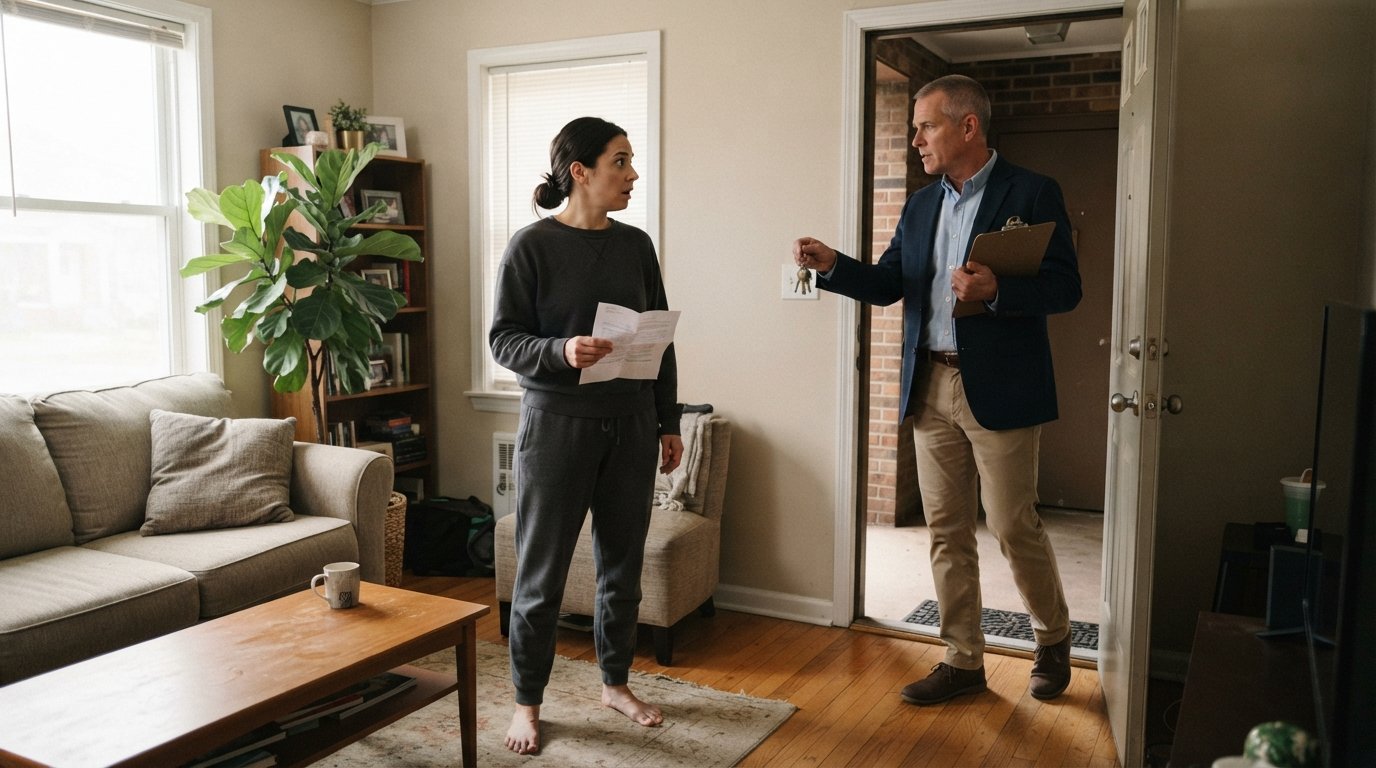
Your landlord knocks once, turns a key, and steps into your living room while you are still in pajamas. Or you come home to find a note saying maintenance let themselves in hours earlier. The question that follows is almost universal among renters: can a landlord enter without notice? The short answer is that in most U.S. jurisdictions, a landlord must give advance notice before entering a rented unit, but there are narrow exceptions such as genuine emergencies. The longer answer involves state statutes, local ordinances, lease language, and the practical steps you can take when a landlord ignores the rules. This tenant rights explained guide walks through the legal landscape, the exceptions, the documentation you need, and the options available when a landlord crosses the line.
What the Law Generally Says About Landlord Entry
The United States has no single federal statute governing residential landlord entry. Instead, every state sets its own rules, usually through a residential landlord-tenant act or a similar statute, and many cities add local ordinances on top. Despite the variation, a clear pattern emerges across the country. Most states require a landlord to provide reasonable advance notice before entering a unit for non-emergency reasons. Notice periods commonly range from 24 to 48 hours, though some states require only reasonable notice without a fixed number, and a few have no explicit statutory notice requirement at all, leaving the lease to fill the gap.
Notice must typically be delivered in a specific way. Many statutes allow written notice posted on the door, mailed, emailed where the lease permits it, or delivered in person. Text messages may or may not qualify depending on the state and the lease terms. The notice should state the reason for entry and the date and time, or a reasonable window, when the landlord intends to come in. A landlord who simply shows up without any notice for a routine inspection, a showing to prospective tenants, or a repair that could easily be scheduled is likely violating the statute in most states.
It is also important to understand that the lease itself matters. Even in states with clear statutory notice rules, leases often restate or expand those rules. Some leases promise 24 hours notice; others promise more. A lease clause that waives notice entirely for routine entries is often unenforceable in states with tenant-protective statutes, but the lease remains the first document a court or housing agency will read. If your lease says 48 hours and the landlord gives 12, you have a strong argument even before you cite the statute.
For a broader look at protections that go beyond entry, including habitability, security deposits, and retaliation, see this guide to tenant rights beyond eviction. It pairs well with the entry rules discussed here because the same agencies and legal processes often handle both issues.
When a Landlord Can Enter Without Notice: The Emergency Exception
The most widely recognized exception to the notice requirement is an emergency. If there is an active water leak, a fire, a gas smell, a broken heater during freezing temperatures, or a similar condition that threatens the property or the safety of occupants, a landlord may enter without advance notice. The scope of this exception is narrower than many landlords assume. A routine repair is not an emergency. A showing to a prospective buyer is not an emergency. A seasonal inspection is not an emergency. The emergency exception exists to prevent imminent damage or harm, not to give landlords a general key to the unit.
Even in an emergency, the entry should be limited to what is necessary to address the problem. A landlord who enters to shut off a burst pipe and then spends an hour opening closets and photographing belongings has moved beyond the emergency exception. Courts and housing agencies look at whether the landlord acted reasonably under the circumstances. If the landlord had time to call or text before entering, some states expect at least an attempt at notice, even when an emergency exists.
Other exceptions vary by state and lease. A landlord may enter without notice if you have abandoned the unit, if a court order authorizes entry, if you consent at the time (for example, you wave them in when they knock), or if the landlord needs to perform emergency repairs ordered by a government agency. Some states also allow entry without notice to post a notice to quit or another legally required document on the door, though the entry itself is usually limited to the threshold. Landlords sometimes cite the need to inspect for lease violations, but that is generally not an emergency exception and still requires notice.
How State and Local Rules Differ on Entry and Retaliation
The variation across states is significant enough that general advice only goes so far. In California, Civil Code Section 1954 requires reasonable notice, generally 24 hours, and limits entry to specific purposes such as repairs, inspections, showings, and emergencies. In New York, Real Property Law Section 235-b and related provisions, along with local housing codes in New York City, impose notice expectations and strong protections against lockouts and harassment. Texas has no explicit statutory notice period for routine entry, so the lease controls, and courts look at reasonableness. Florida statutes address notice for certain entries but leave other situations to the lease. Illinois, Washington, and Massachusetts each have their own notice periods and procedural requirements.
Local ordinances add another layer. Many cities require rental inspections, registration, and specific notice practices. Some cities prohibit landlords from entering to harass tenants or to pressure them into leaving. Retaliation protections are especially important. If you complain about habitability, call a housing inspector, or organize with neighbors, and the landlord suddenly starts entering without notice, that pattern may be retaliation. Many states prohibit retaliation against tenants who assert their rights, and retaliation claims can support damages, lease termination, or other remedies. Keep in mind that retaliation protections vary by state, and some are stronger than others.
Because the rules differ so much, the practical first step is to identify your state statute and any city ordinance that applies. Your lease may also restate the rule. If you are unsure, a landlord-tenant attorney in your area can review your lease and the applicable statute quickly, and many offer a short consultation. You can also use a directory such as TheLawyerDirectory to find local attorneys and request a quote, with no obligation to hire.
Documenting Unauthorized Entry and Communicating in Writing
If your landlord has entered without proper notice, documentation is your strongest tool. Memory fades, and disputes often come down to who has a record. Start a simple log with the date, time, what happened, who entered, what they did, and any witnesses. Save text messages, emails, and notes left on the door. If you have a security camera or a smart doorbell, preserve the footage. Photographs of the unit before and after an entry can show whether anything was disturbed or damaged. Keep copies in a place you can access later, such as a cloud folder or a folder shared with a trusted friend.
Written communication with the landlord should be calm, factual, and specific. A useful structure is to state the date and time of the entry, note that no notice was given, cite the lease clause or state statute if you know it, and ask for written confirmation that future entries will follow the required notice. Avoid threats and avoid admitting anything. Keep a copy of every message. If the landlord responds with a justification, save that too. A polite written record often resolves the issue because it signals that you know your rights and are paying attention.
Here is a simple documentation checklist you can adapt:
- Date, time, and duration of each entry, plus who entered and what they did.
- Copies of texts, emails, notes, and any lease clauses about entry.
- Photos or video showing the condition of the unit before and after.
- Names of witnesses, including neighbors or roommates.
- A written summary of any conversation with the landlord, sent to them afterward for confirmation.
After you send a written complaint, watch for patterns. One unauthorized entry may be careless; repeated entries after you have objected may support a stronger claim, including a retaliation claim in states that protect tenants who assert their rights. Keep documenting even if the landlord apologizes, because a written record protects you if the behavior resumes.
Options When a Landlord Keeps Entering Without Notice
Most renters want the behavior to stop, not a lawsuit. Start with the written communication described above, because many landlords correct the problem once they realize the tenant knows the rules. If that does not work, consider mediation. Many cities and counties offer free or low-cost mediation services for landlord-tenant disputes, and some courts require mediation before a formal case can proceed. Mediation can produce a written agreement about notice, entry times, and communication, which is often more useful than a court order because it addresses the day-to-day relationship.
Tenant agencies and housing departments are another option. Local housing authorities, tenant advocacy organizations, and city code enforcement offices can explain local rules, sometimes contact the landlord directly, and document complaints. In some cities, repeated unauthorized entry may violate local ordinances or harassment provisions. A call to a tenant hotline can help you identify the right agency. If you live in subsidized housing or a unit covered by a specific program, additional rules may apply, and the program administrator may intervene.
Small claims court is available in many states for disputes involving relatively small amounts of money, and some states allow claims related to security deposits, repairs, and lease violations. The limits and procedures vary widely, so check your state's small claims rules before filing. In some jurisdictions, unauthorized entry can support a claim for actual damages, statutory damages, or lease termination, but the available remedies depend on the statute. A tenant who has suffered no financial loss may still have a claim under a statute that provides statutory damages, but proving the claim requires evidence and, often, legal help.
If the problem is serious or repeated, consult a landlord-tenant attorney. An attorney can review your lease, the statute, and your documentation, explain the remedies available in your state, and help you decide whether to negotiate, mediate, or file a case. Many attorneys offer a short initial consultation, and some work on a flat fee for demand letters or advice. If you are looking for counsel, you can describe your situation and request a quote through a service like TheLawyerDirectory, which connects people with participating attorneys in their city; there is no obligation to hire, and the site is an advertising directory, not a law firm or a referral service.
What to Expect From a Quote Request and Legal Consultation
If you decide to speak with an attorney, a quote request is usually a short form describing your situation: your location, the type of dispute, what happened, and what outcome you want. Participating attorneys may then contact you to discuss the matter and provide information about fees and next steps. The initial conversation typically covers the lease, the state statute, your documentation, and the remedies available. Attorneys generally do not promise results, and you should be cautious of anyone who does. A good consultation should leave you with a clearer understanding of your options, not pressure to hire.
Before the call, gather your lease, your documentation log, copies of messages, and any photos or video. Write down the key dates and what you want to achieve. If you are considering small claims court, ask whether the attorney thinks that is realistic and what evidence you would need. If mediation is available, ask whether the attorney can help you prepare or review a mediation agreement. Keep in mind that legal advice is specific to your state and your facts, so general articles like this one are educational only and are not a substitute for advice from a licensed attorney in your jurisdiction.
Tenant rights explained in plain terms come down to this: in most states, your landlord needs advance notice before entering for routine reasons, emergencies are a narrow exception, and your best protection is a written record and a calm, factual response. Know your state statute, read your lease, document what happens, and escalate to mediation, a tenant agency, small claims court, or an attorney if the behavior continues. If you are unsure where to start, a local landlord-tenant attorney can review your situation and explain your options in a single conversation.