
Property Easements and Boundary Disputes Explained
Understand property easements and boundary disputes explained in plain terms, from deeds and surveys to mediation and quiet title. Call 8332484565 for guidance.

By Julian Vega
Few things unsettle a homeowner or commercial property owner faster than discovering that a neighbor, utility company, or government entity has a legal right to use part of their land, or that the fence they believed marked their boundary sits several feet inside a neighbor's parcel. Property easements and boundary disputes sit at the intersection of real estate law, local recording rules, and plain human conflict, and they generate thousands of lawsuits every year across the United States. Understanding how easements are created, how boundaries are legally established, and what steps to take when a disagreement arises can save you tens of thousands of dollars in litigation, preserve your property value, and keep a tense neighbor relationship from spiraling into a courtroom battle.
This guide walks through the fundamentals of easements, the most common types of boundary conflicts, the documents and surveys that decide most cases, and practical resolution paths ranging from informal negotiation to quiet title actions. It is informational only and does not constitute legal advice. If you are facing an active dispute, a real estate attorney licensed in your state can review your deed, title report, and survey and explain your options. You can also find lawyers in your city through TheLawyerDirectory and request a quote with no obligation to hire.
What Is a Property Easement?
An easement is a legal right that allows one party to use another person's land for a specific purpose without owning it. The land subject to the easement is called the servient estate, and the party benefiting from it is the dominant estate. Easements are recorded in property deeds and title documents, and they typically run with the land, meaning they pass to future owners even if those owners never signed the original agreement. A classic example is a shared driveway: your neighbor's parcel is landlocked, and a recorded easement gives them the right to drive across the first 15 feet of your property to reach the public road.
Easements can be affirmative (the right to do something, such as cross the land) or negative (a restriction that prevents the owner from doing something, such as blocking a view or building above a certain height). They can be appurtenant, meaning they benefit a specific neighboring parcel, or in gross, meaning they benefit a person or entity rather than a parcel, which is common with utility easements held by power companies and pipeline operators. The scope of an easement matters enormously: a utility easement for buried cable does not automatically allow the utility to park heavy equipment on your lawn for weeks, and a driveway easement does not usually permit the neighbor to widen the road or pave additional area without permission.
Easements also differ from licenses and from adverse possession. A license is a temporary, revocable permission, such as letting a neighbor cross your yard for a one-time event. Adverse possession is a doctrine under which someone who openly, continuously, and hostilely occupies land for a statutory period may eventually claim title to it. Easements do not transfer ownership, but they permanently limit what the owner can do with the burdened land, which is why buyers and lenders scrutinize them during due diligence.
How Easements Are Created and How They End
Easements arise in several distinct ways, and identifying the correct origin often determines whether the easement is enforceable and how broad it is. The most straightforward method is an express grant in a deed or a separate recorded easement agreement that describes the location, width, and purpose of the right. Easements can also be implied by prior use, such as when a property was subdivided and a driveway or path that was used before the split becomes necessary for the new parcel. Easements by necessity arise when a parcel is landlocked and the law implies a right of access to a public road. Prescriptive easements resemble adverse possession but apply to use rather than ownership: open, notorious, continuous, and hostile use for the statutory period can create a permanent right in some states.
Easements can be terminated through several mechanisms. The dominant owner can release the right in a recorded document. The two parcels can be merged under one owner, which extinguishes the easement by merger. The easement can be abandoned if the holder stops using it for a long period, though abandonment is harder to prove than non-use alone. Condemnation, foreclosure, and tax sales can also wipe out easements depending on state law and the priority of recording. Because these rules vary significantly by state, a title search and an attorney's opinion are the safest way to confirm whether an easement still exists and what it permits.
Practical consequences flow from each type. If you are buying a home with a shared driveway easement, your lender will want to see the recorded document and confirm maintenance obligations. If you own landlocked property, you may have a statutory right of necessity, but the exact route and width may need to be negotiated or litigated. If a utility claims a prescriptive easement over land where no written agreement exists, the utility will need to prove decades of continuous use, which is often a fact-intensive dispute.
Common Types of Boundary Disputes
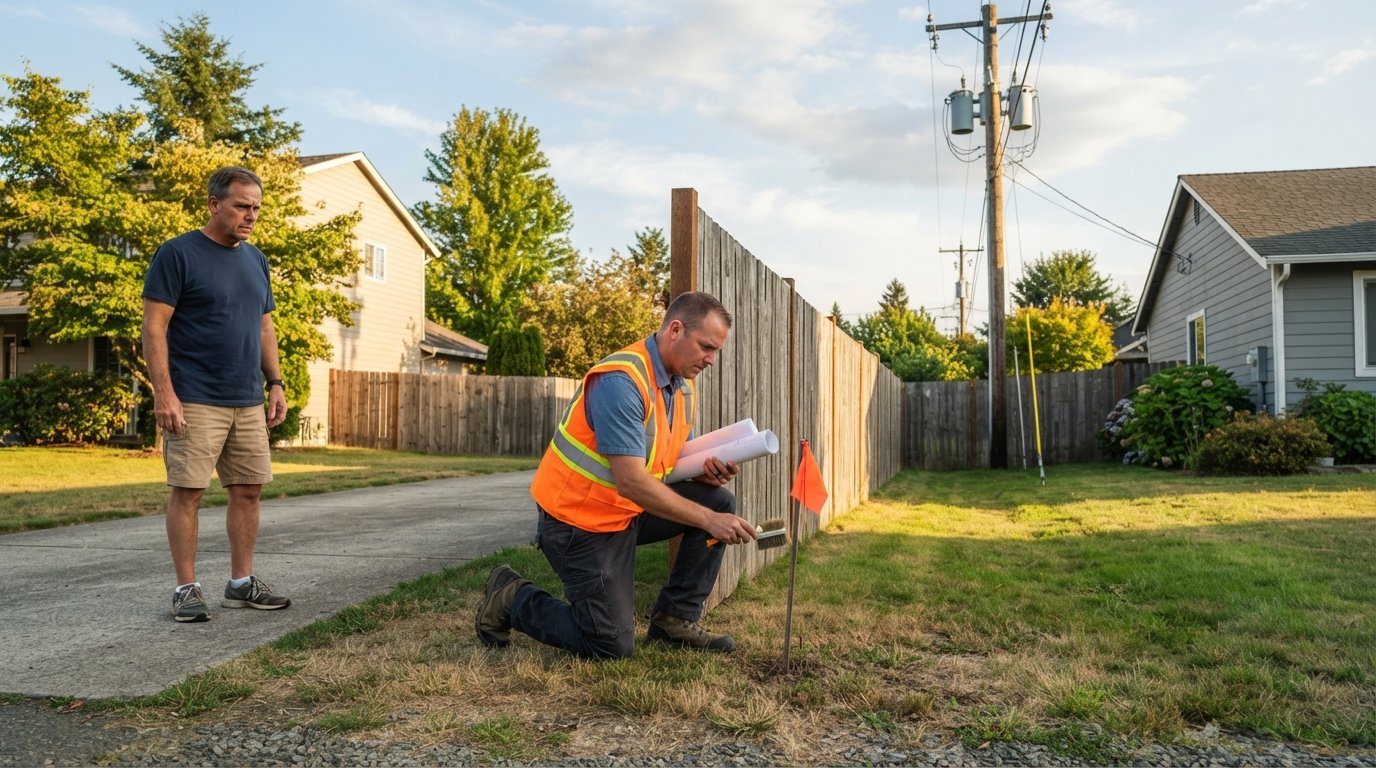
Boundary disputes arise when two parties disagree about where one parcel ends and the next begins. The disagreement may be rooted in an ambiguous deed description, a misplaced fence, a survey that conflicts with a prior survey, or natural changes such as a shifting river or eroding shoreline. In many neighborhoods, the conflict only surfaces when a homeowner tries to sell, build an addition, or refinance, and the title company or lender flags an encroachment.
The most frequent scenarios include fences built over the property line, driveways or retaining walls that cross the boundary, trees whose trunks sit on one side but whose roots or branches damage the other side, and structures such as sheds, garages, or room additions that encroach by inches or feet. Easements can also create boundary-like conflicts when a utility or neighbor claims a right that the owner believes is too broad, or when a landlocked parcel asserts access across a private road that the owner wants to gate.
Before assuming the worst, gather the paperwork. Deeds, plats, subdivision maps, title insurance policies, prior surveys, and any recorded easements or covenants form the documentary backbone of any boundary analysis. In many cases, the documents resolve the issue quickly: a recorded plat may show the true line, or a prior survey may already document an encroachment that the current owner inherited. When documents conflict, a licensed land surveyor can re-establish the boundary using monuments, bearings, distances, and recorded references, and an attorney can interpret how the law applies to those facts.
Key Documents and Evidence in Boundary and Easement Cases
Successful resolution of a boundary or easement dispute usually turns on the quality of the documentary record. The following items are the most important to collect and review early:
- Deed and legal description: The recorded instrument that defines your parcel, including metes and bounds, lot and block references, or plat references.
- Title insurance policy and title search: Reveals recorded easements, covenants, liens, and exceptions that affect the property.
- Current and historical surveys: Show monument locations, encroachments, easement boundaries, and changes over time.
- Plats and subdivision maps: Official recorded maps that establish lot lines and road dedications.
- Correspondence and agreements: Emails, letters, and any prior written permission or boundary line agreement between owners.
Beyond documents, physical evidence matters. Monuments such as iron pins, concrete markers, and stone bounds are often the best evidence of the original survey. Fences, walls, driveways, and landscaping can support claims of adverse possession or prescriptive easement if they have been in place for the statutory period. Photographs with timestamps, maintenance records, and witness statements from long-time neighbors can also be persuasive.
If the dispute involves a utility easement, request the utility's recorded easement documents and any maps showing the location of lines. If the dispute involves a homeowners association, review the covenants, conditions, and restrictions (CC&Rs) and the association's architectural review rules. In all cases, keep a organized file and a timeline of events, because memory fades and opposing parties may dispute dates and conversations.
Resolution Options: From Negotiation to Litigation
Most boundary and easement disputes can be resolved without a trial, but the path depends on the willingness of the parties and the strength of the evidence. The first step is almost always a direct, documented conversation. A polite letter that summarizes the issue, references the relevant documents, and proposes a practical solution often prevents escalation. Mediation is a natural next step: a neutral mediator can help the parties reach a boundary line agreement, an easement modification, or a cost-sharing arrangement for a fence or driveway repair. Mediation is typically faster and far less expensive than litigation, and settlements can be recorded to bind future owners.
If negotiation and mediation fail, formal legal options include declaratory judgment actions to determine rights, quiet title actions to clear ownership, injunctions to stop encroachment or interference, and damages claims for trespass or nuisance. Some states require boundary disputes to go through a specific statutory process, such as a boundary line agreement or a petition to establish the line. A court may appoint a surveyor or referee to establish the boundary, and the losing party may be ordered to pay costs.
Time limits matter. Statutes of limitation apply to many property claims, and the doctrine of laches can bar a claim if a party waited too long and the other side relied on the delay. Because these deadlines vary by state and by claim type, consult an attorney promptly once you know a dispute exists. If you prefer to start with a low-pressure inquiry, you can submit a request through a lawyer directory, describe your situation, and receive responses from attorneys who handle real estate matters in your area, with no obligation to hire.
How a Real Estate Attorney Can Help
A real estate attorney brings several concrete skills to an easement or boundary dispute. First, they can read the chain of title and interpret deeds, plats, and easement documents in light of state law. Second, they can commission or review a survey and work with the surveyor to establish the boundary. Third, they can negotiate on your behalf, draft boundary line agreements, easement modifications, and settlement agreements, and record the necessary documents. Fourth, if litigation is unavoidable, they can file the appropriate action, present evidence, and protect your interests at trial.
Attorneys also help with preventive work. Before you buy a property, a real estate attorney can review the title commitment, easements, and survey and flag issues that could become disputes later. Before you build a fence, add a room, or pave a driveway, an attorney can confirm the setback and easement requirements and help you obtain any necessary approvals. If you are selling, an attorney can help resolve an existing boundary issue so it does not derail the closing.
When choosing counsel, look for someone who regularly handles real estate litigation or transactions in the county where the property sits, because local rules and customs matter. Ask about their experience with boundary disputes, easement interpretation, and quiet title actions, and ask for a clear explanation of fees and likely timelines. If you are not sure where to start, a U.S. lawyer directory such as TheLawyerDirectory lets you search by city and practice area and request a quote from participating attorneys. The site is an advertising platform, not a law firm or a referral service, and there is no obligation to hire.
Practical Steps to Protect Your Property Rights
Whether you are in the middle of a dispute or simply want to avoid one, a few disciplined habits go a long way. Keep your deed, title policy, survey, and any easement documents in a safe place, and review them before any construction or landscaping project. Walk your property lines periodically and compare them to the survey. If a neighbor asks for permission to use part of your land, put the agreement in writing, even if it is temporary, and specify the scope, duration, and whether it can be revoked. If you grant an easement, record it so it binds future owners, and consider whether a maintenance cost-sharing clause makes sense.
If a dispute arises, do not resort to self-help measures such as removing a fence, blocking a driveway, or cutting down a tree on the disputed line without legal advice. Those actions can escalate the conflict, damage your case, and in some states expose you to liability. Instead, document the condition of the property with photos and notes, preserve any relevant correspondence, and consult an attorney before taking action.
Finally, remember that easements and boundaries are not just legal abstractions. They affect property value, insurability, and the quiet enjoyment of your home or business. A small investment in legal review and a properly recorded agreement can prevent a dispute that costs many times more to resolve later. If you need help understanding your rights or negotiating a resolution, a qualified real estate attorney can guide you through the process, and a lawyer directory can connect you with local counsel who offer quotes with no obligation to hire.